

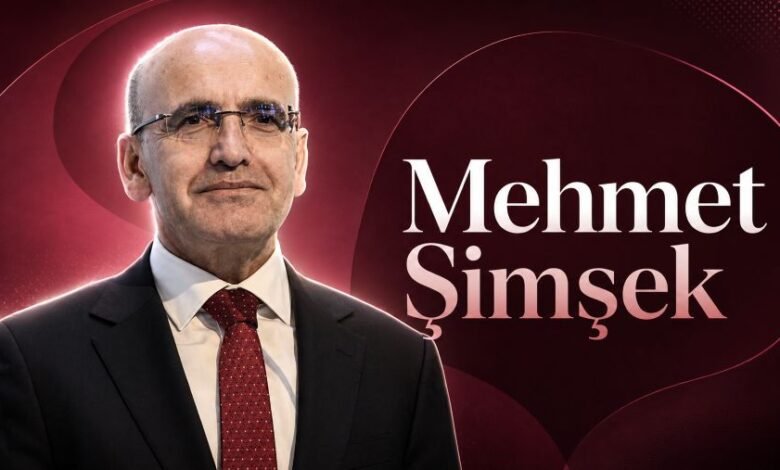
Mehmet Şimşek: Turkey’s Finance Minister and Economic Leader
A clear look at Mehmet Şimşek’s early life, education, banking career, political journey and current role in Turkey’s economy

Last Updated on August 6, 2026 by Fame Katha Editorial Team
Introduction
Mehmet Şimşek is a Turkish economist, former investment banker and senior political leader. He is best known for managing important parts of Turkey’s economy during several governments.
As of August 2026, Mehmet Şimşek serves as the Minister of Treasury and Finance of Türkiye. He returned to this senior government position on 4 June 2023. His work mainly covers public finances, economic policy, taxation, government borrowing and financial reforms.
Before entering politics, Şimşek worked in the international banking sector in Ankara, Istanbul, New York and London. He later served as a member of parliament, finance minister and deputy prime minister.
Mehmet Şimşek Quick Facts
| Detail | Information |
|---|---|
| Full name | Mehmet Şimşek |
| Date of birth | 1 January 1967 |
| Birthplace | Batman, Türkiye |
| Nationality | Turkish |
| Profession | Economist and politician |
| Current position | Minister of Treasury and Finance |
| Current term began | 4 June 2023 |
| Education | Ankara University and University of Exeter |
| Political party | Justice and Development Party |
| Former profession | Investment banker and economic strategist |
| Parliamentary regions | Gaziantep and Batman |
| Marital status | Married |
| Children | Three |
| Languages publicly documented | Turkish and English |
The Turkish Parliament’s official profile confirms his birth date, education, professional background, parliamentary service and publicly acknowledged family status.
Early Life and Background
Mehmet Şimşek was born on 1 January 1967 in Batman, a province in southeastern Türkiye.
He grew up in a rural area before moving forward through education. His journey from a small community to international banking and national government later became an important part of his public story.
Reliable official records provide limited details about his childhood. For this reason, stories about his early family life that cannot be independently confirmed should be treated carefully.
Education
Şimşek studied economics at the Faculty of Political Sciences at Ankara University. He completed his undergraduate education in 1988.
After finishing university, he briefly worked as a research assistant in an academic department connected with economics and development.
He later received a government scholarship for postgraduate education in the United Kingdom. He attended the University of Exeter and completed his postgraduate studies in finance and investment in 1993.
His education gave him a strong base in economics, financial markets, public policy and investment analysis.
Early Professional Career
Mehmet Şimşek did not begin his career as a politician. He first built professional experience as an economist and financial-market specialist.
After completing his education in the United Kingdom, he returned to Türkiye. He worked briefly at Etibank before joining the United States Embassy in Ankara.
At the embassy, he worked as a senior economist. This position allowed him to study Turkey’s economy, financial conditions and public policies.
Work in New York and Istanbul
In 1997, Şimşek moved to New York and joined UBS Securities. He worked in equity research, which involves studying companies, industries and financial markets.
He returned to Istanbul in 1998. He then worked for Deutsche-Bender Securities as a senior economist and banking analyst.
These roles helped him gain experience in international investments, banking, market research and economic strategy.
Merrill Lynch Career
In 2000, Mehmet Şimşek moved to London and joined Merrill Lynch, one of the world’s best-known financial-services companies at the time.
He initially studied markets including Türkiye, Greece, Egypt and Israel. His area of responsibility later expanded to developing European economies such as Russia, Poland, Hungary and the Czech Republic.
He eventually held a senior research and strategy role covering Europe, the Middle East and Africa.
Şimşek spent about seven years at Merrill Lynch. His work in London made him familiar with international investors, global financial institutions and emerging markets.
He left the company in 2007 to enter Turkish politics.
Readers interested in other major decision-makers can explore more business and leadership profiles on FameKatha.
Entry into Politics
Mehmet Şimşek entered active politics in 2007 as a member of the Justice and Development Party, commonly called the AK Party.
He was elected to the Turkish Parliament as a representative for Gaziantep. Soon after entering parliament, he joined the government as a minister of state with responsibility for economic and treasury matters.
This was an important career change. He moved directly from international banking into national economic management.
Minister of State
From 2007 to 2009, Şimşek served as a minister of state responsible for important economic areas.
During this period, his responsibilities included the Treasury and Türkiye’s relationships with major international financial organisations.
He also represented the country in its dealings with institutions such as the International Monetary Fund and the World Bank.
Finance Minister
Mehmet Şimşek became Turkey’s finance minister in May 2009.
He remained in this role until November 2015 and served under different Turkish governments. His work included managing the national budget, public spending, taxes and financial reforms.
His period as finance minister covered the years following the 2008 global financial crisis. Türkiye, like many countries, faced economic pressure during this time.
Şimşek became one of the most internationally recognised members of Turkey’s economic leadership team.
In 2011, he was elected to parliament from Batman. He was later elected again from Gaziantep.
Deputy Prime Minister
In November 2015, Mehmet Şimşek became deputy prime minister responsible for economic and financial affairs.
He served as deputy prime minister until July 2018. His responsibilities included helping coordinate the government’s economic policies and working with financial institutions.
Şimşek left the cabinet in 2018 when Türkiye introduced a new presidential system and reorganised several government positions.
Return to Government in 2023
After spending nearly five years outside the cabinet, Mehmet Şimşek returned to government in June 2023.
President Recep Tayyip Erdoğan appointed him Minister of Treasury and Finance following the 2023 presidential election.
His return attracted attention from Turkish businesses, international banks and global investors. This was mainly because of his previous experience in conventional economic policy and international financial markets.
At the beginning of his new term, Şimşek said Türkiye needed predictable, rules-based and rational economic management.
Current Role and Responsibilities
As of August 2026, Mehmet Şimşek remains Türkiye’s Minister of Treasury and Finance.
His ministry is responsible for areas such as:
- The national budget
- Government revenue
- Tax policy
- Public borrowing
- Treasury management
- Financial regulations
- Economic reform programmes
- Cooperation with international financial institutions
He also represents Türkiye during meetings with foreign investors, banks, credit-rating organisations and international economic bodies.
Economic Programme
A major part of Şimşek’s current work is Türkiye’s programme to reduce inflation and improve financial stability.
The programme focuses on:
- Reducing inflation over time
- Controlling government spending
- Improving tax collection
- Maintaining financial discipline
- Increasing investor confidence
- Supporting sustainable economic growth
- Reducing economic imbalances
- Introducing structural reforms
The programme has required strict financial policies. These policies may support long-term stability, but they can also create short-term pressure on families and businesses.
Şimşek has repeatedly said that controlling inflation is necessary for stronger and more stable growth.
International institutions have recognised improvements in some economic areas while also saying that Türkiye must continue careful financial policies and structural reforms.
International Investor Relations
Mehmet Şimşek regularly meets international investors and financial leaders.
His background in London and New York helps him communicate with major banks, investment companies and global institutions.
In 2026, he continued attending investor meetings and explaining Türkiye’s economic plans. His messages focused on policy continuity, inflation reduction and financial stability.
His international experience is one reason he holds an important position between the Turkish government and global financial markets.
Awards and Recognition
Mehmet Şimşek received notable professional recognition during his earlier period in government.
In 2013, Emerging Markets named him Finance Minister of the Year for Emerging Europe.
During the same year, Foreign Policy included him in a list of 500 influential people from around the world.
These honours were connected with his public work in economic management and international finance.
Personal Life
Official parliamentary information states that Mehmet Şimşek is married and has three children.
He is also documented as speaking English at an advanced level. His education and professional work in the United Kingdom and United States required him to use English regularly.
Private family information that is not important to his public career should not be treated as part of his professional profile.
Political and Economic Importance
Mehmet Şimşek is important because he has managed parts of Türkiye’s economy during two major periods.
The first period lasted from 2007 to 2018. During those years, he worked as a minister of state, finance minister and deputy prime minister.
The second period began in June 2023, when he returned as Minister of Treasury and Finance.
His career combines three major areas:
- Academic education in economics
- Professional experience in international banking
- Senior responsibility in government
This combination has made him one of Türkiye’s best-known economic policymakers.
Frequently Asked Questions
Who is Mehmet Şimşek?
Mehmet Şimşek is a Turkish economist, politician and former investment banker. He currently serves as Türkiye’s Minister of Treasury and Finance.
What is Mehmet Şimşek’s current position?
As of August 2026, he is the Minister of Treasury and Finance of Türkiye.
When was Mehmet Şimşek born?
He was born on 1 January 1967.
Where was Mehmet Şimşek born?
He was born in Batman, Türkiye.
What did Mehmet Şimşek study?
He studied economics at Ankara University and completed postgraduate studies at the University of Exeter in the United Kingdom.
Did Mehmet Şimşek work for Merrill Lynch?
Yes. He worked at Merrill Lynch in London for approximately seven years before entering politics.
When did Mehmet Şimşek enter politics?
He entered Turkish politics in 2007 and was elected to parliament from Gaziantep.
Which political party is Mehmet Şimşek connected with?
He entered parliament as a member of the Justice and Development Party, also known as the AK Party.
Has Mehmet Şimşek served as finance minister before?
Yes. He served as finance minister from 2009 to 2015 before returning as Minister of Treasury and Finance in 2023.
Is Mehmet Şimşek married?
Official parliamentary records state that he is married and has three children.
Conclusion
Mehmet Şimşek is an economist and political leader with experience in both international banking and government.
He worked in Ankara, Istanbul, New York and London before entering Turkish politics in 2007. He later served as finance minister and deputy prime minister.
His return to government in June 2023 placed him at the centre of Türkiye’s efforts to reduce inflation, strengthen public finances and rebuild investor confidence.
As of August 2026, he continues to serve as Minister of Treasury and Finance and remains one of the country’s most important economic policymakers.