
Masayoshi Son: How a Young Inventor Built the SoftBank Empire
From a modest childhood in Japan to billion-dollar technology investments, the SoftBank founder has built a career full of bold decisions, huge wins, painful losses, and new plans for artificial intelligence.

Last Updated on October 9, 2026 by Fame Katha Editorial Team
Introduction
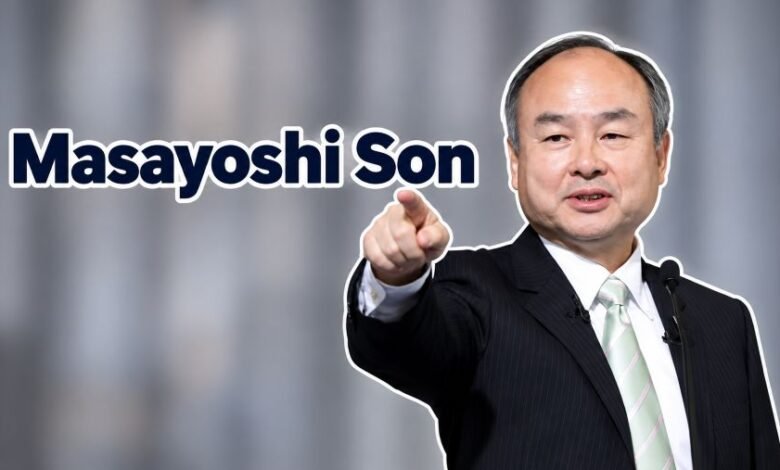
Masayoshi Son is a Japanese billionaire, entrepreneur, and the founder of SoftBank Group. He started his company in 1981. Today, it is a major name in technology investment, telecommunications, and artificial intelligence.
His story has some surprising turns.
He made money as a student. He backed Alibaba early. He lost billions during market crashes. Then he returned with even bigger plans.
Now, at 69, he is putting much of his attention into AI, computer chips, robotics, and the infrastructure needed to support them.
But how did he get here? And what makes his career so different?
His early life helps explain a lot.
Quick Facts
| Detail | Information |
|---|---|
| Full name | Masayoshi Son |
| Japanese name | 孫 正義 |
| Date of birth | 11 August 1957 |
| Age | 69 years (October 2026) |
| Birthplace | Tosu, Saga Prefecture, Japan |
| Nationality | Japanese |
| Family background | Korean ancestry |
| Profession | Entrepreneur, investor, business executive |
| Education | University of California, Berkeley |
| Degree | Economics |
| Graduation year | 1980 |
| Marital status | Married |
| Children | Two |
| Famous for | Founding SoftBank Group |
| Company founded | Nihon SoftBank, 1981 |
| Current position | Chairman and CEO, SoftBank Group |
| Other major role | Chairman and Director, Arm Holdings |
| Residence | Tokyo, Japan |
| Net worth | $80 billion, Forbes’ June 2026 rich-list estimate |
| Main interests in business | AI, technology investment, telecommunications, semiconductors |
Early Life and Family Background
He was born on 11 August 1957 in Tosu, a city in Japan’s Saga Prefecture.
His childhood was far from luxurious.
His family had Korean roots. His grandparents had migrated to Japan, and the family lived among the country’s ethnic Korean community.
Growing up was not always easy.
People of Korean ancestry faced discrimination in Japan, and his family experienced some of those difficulties. The family used the Japanese surname Yasumoto before he chose to use Son, the family’s Korean surname.
That choice mattered to him.
It reflected his willingness to acknowledge his background, even when doing so could create difficulties.
His father worked in several businesses to support the family. Son grew up watching how money was earned, how businesses worked, and why taking risks could sometimes change a family’s future.
There was another lesson, too.
In his 2026 message to SoftBank shareholders, he recalled his father telling him to live in a way that made other people happy rather than concentrating only on money.
He carried that advice into his business life.
How a Japanese Entrepreneur Inspired Him
As a teenager, he became interested in successful business owners.
One of them was Den Fujita, the businessman who brought McDonald’s to Japan.
Fujita’s success caught his attention.
According to published accounts, the young Son made repeated attempts to contact him and eventually secured a meeting in Tokyo.
Fujita encouraged him to study English and computers.
This advice arrived at an interesting time. Computers were becoming more useful, but the personal-computer industry was still developing.
Son began looking toward America.
California offered something he wanted: access to new technology, universities, and people starting computer businesses.
So he made a big move while still a teenager.
Education and Life in California
He moved to the United States at around age 16.
His education took him through California before he entered the University of California, Berkeley.
There, he studied economics.
He graduated in 1980.
But university was only part of his education. He was already trying business ideas while attending classes.
One of his early interests was electronic translation.
Working with researchers, he developed an electronic language translator. Japanese electronics company Sharp purchased the design.
The transaction helped him earn his first substantial money.
He also worked with imported Japanese arcade-game machines. Historical accounts describe him placing machines in American businesses and earning money from their use.
Think about that for a moment.
He was studying economics while testing real businesses. He could see how technology could become a product people were willing to pay for.
That experience stayed with him.
After completing university, he returned to Japan and began working on a much larger idea.
Starting His First Major Company
In September 1981, at age 24, he established Nihon SoftBank.
The original business was simple.
It distributed computer software.
Personal computers were becoming popular, and software developers needed a way to get their products into shops and offices.
He saw the opening.
Instead of producing every computer program himself, he built a company that helped other businesses distribute their software.
The approach allowed SoftBank to take part in the growth of Japan’s computer industry.
In 1982, the company entered publishing.
It launched computer magazines, including Oh! PC and Oh! MZ. These publications served people who wanted news, product information, and help understanding personal computers.
The business kept growing.
Over time, it moved into internet services, broadband, mobile communications, and international investment.
The official SoftBank company history documents these early years and its later expansion.
Building a Business Around the Internet
By the 1990s, the internet was beginning to attract public attention.
Son believed the technology would become a major part of everyday life.
He began investing in internet companies and forming business partnerships.
Yahoo became one of the most important.
SoftBank invested in the American internet company during the 1990s. In 1996, it established Yahoo Japan through a joint venture.
Yahoo Japan grew into a widely used online platform.
Its services included search, news, advertising, and online shopping.
SoftBank was no longer only a software distributor.
It was becoming a business with direct exposure to the growing internet market.
Then came an investment that would change Son’s financial standing for years.
The Alibaba Investment That Changed Everything
In 2000, SoftBank invested approximately $20 million in Alibaba.
The Chinese company was led by Jack Ma.
At the time, Alibaba was much smaller than the international business it later became.
Son backed its potential early.
The investment grew enormously in value as Alibaba expanded its online commerce operations across China and other markets.
When Alibaba listed on the New York Stock Exchange in 2014, SoftBank’s ownership was worth tens of billions of dollars.
It became one of the most famous early investments in technology history.
But this was not a quick profit.
The investment took years to develop. SoftBank held a major interest while Alibaba grew, and later sold down its position through several transactions.
For Son, the Alibaba story showed what could happen when a small investment was made in the right business at an early stage.
Still, his investment record contains serious failures too.
Losing Billions During the Dot-Com Crash
Success did not protect him from losses.
In the late 1990s, technology shares rose sharply. Investors poured money into internet companies, sometimes before those businesses could produce steady profits.
SoftBank’s market value climbed.
Son’s estimated personal wealth rose with it.
Then the market collapsed.
During the dot-com crash beginning in 2000, SoftBank’s share price suffered a massive fall.
Historical reporting describes a decline of roughly 97% from its peak.
His estimated paper wealth fell by tens of billions of dollars.
It was a tough period.
Yet SoftBank continued operating. Its internet investments, Japanese businesses, and later telecommunications operations gave the company ways to keep working.
That recovery became part of Son’s public business story.
He was willing to take large risks. Sometimes those risks worked. Sometimes the losses were enormous.
Entering the Mobile Phone Business
The next major chapter involved telecommunications.
In 2006, SoftBank acquired Vodafone’s Japanese mobile operations.
The purchase allowed the group to become a major mobile-network provider in Japan.
The timing mattered.
Mobile phones were becoming much more than devices for calling and texting.
In 2008, SoftBank began offering Apple’s iPhone 3G in Japan.
That helped strengthen its place in the country’s smartphone market.
Son also pushed broadband services, including Yahoo! BB, which launched commercial operations in 2001.
His business now connected directly with millions of customers.
Later, SoftBank expanded its international telecom interests.
In 2013, it acquired the American mobile operator Sprint. Sprint eventually merged with T-Mobile US in April 2020.
After that merger, SoftBank retained an investment interest rather than continuing to control Sprint as a separate subsidiary.
Why He Bought Arm Holdings
In 2016, SoftBank acquired the British semiconductor business Arm for approximately £24 billion.
This was another large decision.
Arm develops processor designs and related technology used by other companies to create computer chips.
Its technology is found in many types of devices, from smartphones to servers.
Son believed demand for computing would continue growing.
The acquisition gave SoftBank ownership of a business connected to that demand.
Arm returned to the public market through a Nasdaq listing in September 2023.
Son remained its chairman.
The business later became closely connected to SoftBank’s plans around AI, where large amounts of computing power are needed.
Creating the Vision Funds
In 2017, SoftBank launched Vision Fund 1.
It attracted money from major investors, including Saudi Arabia’s Public Investment Fund.
The aim was to invest large sums in technology businesses around the world.
Son wanted to find companies capable of growing into major players in their industries.
A second Vision Fund followed in 2019.
Across SoftBank’s investment operations, companies such as Grab, Coupang, Swiggy, Uber, and WeWork received financial backing.
Some grew into established public companies.
Others struggled badly.
The funds gave SoftBank exposure to many technology markets, but their performance also showed the danger of investing large amounts at high valuations.
The WeWork Mistake
WeWork became one of SoftBank’s most public investment disappointments.
The company offered shared office space and planned an aggressive international expansion.
Son strongly supported the business and its founder, Adam Neumann.
At one point, WeWork carried a private valuation of about $47 billion.
Then investors started questioning its losses, spending, and management practices.
Its planned public offering failed in 2019.
SoftBank suffered substantial losses and committed more financial support while trying to keep the business operating.
WeWork filed for US bankruptcy protection in November 2023.
That ending raised serious questions about SoftBank’s investment strategy.
Son publicly acknowledged mistakes in his handling of WeWork.
The experience did not end his interest in technology investment, but it became a reminder that ambitious business plans can fail even with access to billions of dollars.
His Net Worth in 2026
Masayoshi Son remains one of Japan’s wealthiest businessmen.
Forbes estimated his wealth at $80 billion for its June 2026 Japan’s 50 Richest list.
That placed him first in the published ranking.
His wealth had risen sharply from the previous year, helped by the increasing market value of SoftBank’s assets and its exposure to artificial intelligence businesses.
But net worth is not the same as cash.
Much of his wealth is linked to shares and other investments.
Their market prices can change quickly.
A rising SoftBank share price may lift his estimated fortune. A steep decline can have the opposite effect.
So any figure should always include its date.
According to SoftBank’s official executive disclosure, he held more than 1.86 billion SoftBank Group shares as of 1 June 2026.
The Forbes wealth profile provides market-dependent estimates rather than a fixed value.
Wife, Children, and Personal Life
He is married and has two children, according to Forbes.
Unlike his business activities, his family life receives limited public attention.
There is much more reliable information about his companies than about the personal lives of his wife and children.
That distinction matters.
Private details should not be treated as established facts simply because they appear on celebrity profile websites.
He has spent much of his professional life in Japan, and Forbes lists Tokyo as his residence.
His family background remains an important part of his personal story, especially his experience growing up with Korean ancestry in Japan.
Yet his public work is mainly centred on SoftBank and its investments.
His Connection to Japanese Baseball
Business is not his only interest.
SoftBank acquired the Fukuoka Hawks professional baseball club in 2005.
The team became known as the Fukuoka SoftBank Hawks.
Son was named as its owner and director in the official acquisition announcement.
The club continues to be associated with the SoftBank name.
This investment placed the company into one of Japan’s most popular sports and gave its brand a presence beyond technology.
Charity and Donations
One of his best-documented charitable commitments followed the 2011 Great East Japan Earthquake.
The disaster caused widespread damage and loss of life.
Son announced a personal donation of ¥10 billion for relief and rebuilding support.
SoftBank separately announced corporate aid.
His personal donation supported several organisations and affected local governments, including work for children who had lost parents in the disaster.
He also committed his future executive remuneration to support orphaned children.
SoftBank published details of the allocation in an official May 2011 announcement.
This remains a major documented part of his charitable history.
His Big Move Into Artificial Intelligence
Right now, AI sits near the centre of his business plans.
Son believes advanced AI systems will become increasingly useful to companies and ordinary people.
He has discussed a future technology he calls artificial superintelligence, or ASI.
In his view, such systems could eventually perform intellectual tasks beyond human ability.
That is his long-term prediction, not a capability that has already been proven.
SoftBank is concentrating investment across AI models, semiconductor technology, computing infrastructure, and robotics.
Arm is important to the semiconductor side of the plan.
OpenAI is one of the group’s main AI partners.
SoftBank has also increased its interest in the data centres and physical infrastructure needed to operate large AI systems.
The scale is enormous.
But large spending does not guarantee success. These investments still face business, engineering, and financial risks.
The OpenAI Investment
SoftBank began investing in OpenAI through Vision Fund 2 in 2024.
Its financial commitment grew sharply afterward.
On 1 October 2026, SoftBank confirmed that it had completed another $10 billion investment tranche.
That finished a previously announced $30 billion follow-on investment programme.
The company said its cumulative OpenAI investment had reached approximately $64.6 billion.
Its ownership interest was approximately 13%.
This is a corporate investment held through SoftBank’s business structure, rather than a direct personal investment of the same amount by Son.
The figures come from SoftBank’s October 2026 official announcement.
What Is the Stargate Project?
In January 2025, OpenAI and SoftBank announced the Stargate Project alongside other partners.
Oracle and MGX were among its initial investors.
The project set out plans for major AI infrastructure development in the United States, with an intended investment scale of up to $500 billion over four years.
Son was named chairman of Stargate.
The project involves the computing facilities needed for advanced AI services.
These facilities require powerful processors, electricity, cooling systems, and high-capacity networks.
That means the work goes well beyond software.
The announced $500 billion figure represents the project’s planned investment scale. It should not be described as money already fully spent.
What Is He Working on in October 2026?
His investment activity has remained busy.
In September 2026, SoftBank completed its acquisition of DigitalBridge’s outstanding common stock for approximately $3.1 billion.
DigitalBridge invests in digital infrastructure such as data centres, fibre networks, and communication towers.
The business fits SoftBank’s wider interest in the physical systems required to support AI.
On 8 October 2026, SoftBank, Grab, and PETROS announced a framework agreement to study AI infrastructure and related business opportunities in Sarawak, Malaysia.
The agreement concerns possible future development.
It does not mean every proposed project has already been approved or built.
Another report appeared on 9 October 2026.
Reuters reported, citing the Financial Times, that Son was seeking as much as $100 billion from Gulf investors for a possible new AI investment initiative.
Discussions reportedly included investors in the United Arab Emirates.
However, the report was not independently verified by Reuters, and SoftBank had not confirmed the proposed fundraising.
For now, it remains a reported plan rather than a completed financial transaction.
His Leadership Style and Business Thinking
He has never been known for making small plans.
As a young university student, he created a personal 50-year business plan.
The idea was to establish himself early, build resources, take on larger projects, and eventually pass leadership to a younger generation.
His own plans later changed.
In his 2026 annual report message, he explained that he wanted to keep working into his 70s, rather than follow his original retirement timetable.
He also suggested he might continue for another 10 to 15 years.
His reason was his interest in AI.
He wants SoftBank to become one of the leading businesses supporting the development and use of more advanced AI systems.
Still, his record calls for a balanced assessment.
Alibaba became a major success.
WeWork went badly wrong.
Other investments sit somewhere between those outcomes.
His career shows the possible rewards of taking big financial risks, along with the damage that can follow when expectations prove too high.
Major Career Achievements
A few events stand out from his long business history.
- 1981: Established Nihon SoftBank in Japan.
- 1982: Entered the computer publishing business.
- 1996: Helped establish Yahoo Japan.
- 2000: Backed Alibaba with an early investment.
- 2006: Acquired Vodafone’s Japanese mobile operations.
- 2008: Introduced the iPhone 3G through SoftBank in Japan.
- 2013: Acquired the US mobile operator Sprint.
- 2016: Completed the acquisition of Arm.
- 2017: Launched SoftBank Vision Fund 1.
- 2023: Oversaw Arm’s return to the public market.
- 2025: Joined the Stargate AI infrastructure initiative as chairman.
- 2026: Expanded SoftBank’s OpenAI investment and acquired DigitalBridge.
These milestones show how far the original software business has travelled.
What Makes His Career Different?
Many entrepreneurs build their reputation around one business.
Son’s career has covered several industries.
He started with software distribution. He later backed internet companies, moved into telecom services, and made large investments in chip design and AI.
His approach has often involved identifying a technology he believes will become widely used, then placing a substantial financial bet on its growth.
Sometimes he was early and right.
Other times, the timing or business model failed.
There is no simple formula here.
He has worked through huge profits, falling share prices, failed investments, and new business opportunities.
His decisions have affected companies and investors far beyond Japan.
Today, the financial success of his AI plans remains uncertain. Their scale, though, makes them a major part of SoftBank’s story.
Final Thought
Masayoshi Son started with a computer-software business in 1981. More than four decades later, he is still leading the company he founded.
He has made huge bets.
Some paid off. Others didn’t.
His early Alibaba investment brought extraordinary returns, while WeWork exposed the risks of backing expensive businesses that struggled to support their growth.
At 69, he remains focused on the future.
AI is now his biggest area of attention.
Whether his latest plans deliver the results he expects will become clearer over time. What is already established is the scale of his business career, from a young student developing inventions in California to the head of a global investment group.
Frequently Asked Questions
1. Who is Masayoshi Son?
He is a Japanese billionaire entrepreneur and investor. He founded SoftBank in 1981 and serves as Chairman and CEO of SoftBank Group.
2. How old is he in 2026?
He is 69 years old. He was born on 11 August 1957 in Tosu, Japan.
3. Where did he study?
He studied at the University of California, Berkeley, graduating in 1980 with a degree in economics.
4. Is he married?
Yes. Forbes lists him as married with two children. He keeps much of his family life outside public business reporting.
5. What is his net worth?
Forbes estimated his net worth at $80 billion for its June 2026 Japan rich list. The value changes with market prices and investment valuations.
6. Why is he famous?
He is best known for founding SoftBank, backing Alibaba early, acquiring Arm, and establishing major technology investment funds.
7. Does he own Alibaba?
SoftBank was an early major investor in Alibaba. It later sold down its holdings, so the historic investment should not be confused with his present ownership.
8. Is he still CEO of SoftBank?
Yes. As of October 2026, he remains Chairman and CEO of SoftBank Group. The separately listed Japanese telecommunications business has its own management.