
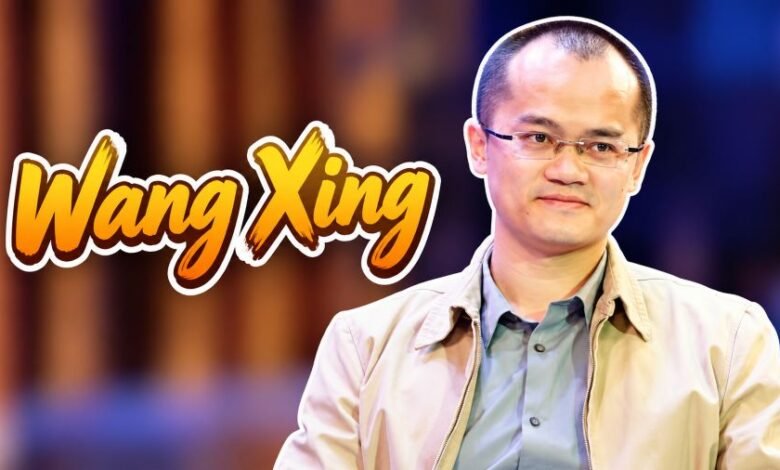
Wang Xing: The Man Who Built Meituan After Years of Failed Startups
From university social networks to a billion-dollar food delivery business, here is the story of the Chinese entrepreneur who kept trying until one idea worked.

Last Updated on October 14, 2026 by Fame Katha Editorial Team
Introduction
Wang Xing is a Chinese billionaire businessman and the founder, chairman, and CEO of Meituan. He helped build one of China’s biggest platforms for food delivery, shopping, hotel bookings, and local services.
But his story did not begin with Meituan.
Before becoming a successful business leader, he worked on several internet startups. Some failed. One was sold. Another faced government restrictions. Still, he kept building new businesses.
Then came Meituan in 2010.
That decision changed his career. Today, his company serves consumers and businesses across China and has entered overseas markets through its Keeta delivery service.
Quick Facts About Wang Xing
| Detail | Information |
|---|---|
| Full Name | Wang Xing |
| Chinese Name | 王兴 |
| Date of Birth | 18 February 1979 |
| Age | 47 years old (2026) |
| Birthplace | Longyan, Fujian, China |
| Nationality | Chinese |
| Profession | Entrepreneur and business executive |
| Famous For | Founder of Meituan |
| Education | Tsinghua University, University of Delaware |
| Father’s Name | Wang Miao |
| Wife | Guo Wanhuai |
| Main Company | Meituan |
| Previous Ventures | Xiaonei, Fanfou |
| Current Position | Chairman and CEO of Meituan |
| Net Worth | US$7.3 billion, Forbes estimate from March 2026 |
| Stock Market Listing | Hong Kong Stock Exchange (3690) |
Early Life and Family Background
Wang Xing was born on February 18, 1979, in Longyan, Fujian province, China.
He grew up in a business family.
His father, Wang Miao, was involved in the cement industry and owned a cement factory in Fujian. This gave the family a comfortable financial position.
Money was not his main problem.
He had access to education and family support. But building an internet company would still be a difficult task.
Wang developed an interest in technology during his younger years. He also performed well academically.
His background helped him pursue further education. Later, he chose business over a conventional academic career.
That choice changed everything.
Education and University Years
His education began in China.
He attended Longyan No. 1 Middle School before entering Tsinghua University in Beijing in 1997.
Tsinghua is one of China’s leading universities. Wang studied electronic engineering and graduated in July 2001.
During university, he met Wang Huiwen.
The two became friends and later worked together on business projects. Their professional relationship continued for many years.
Studying in the United States
After completing his bachelor’s degree, he travelled to the United States.
He attended the University of Delaware for graduate studies. He initially pursued doctoral-level research but chose to leave the PhD programme.
He received a master’s degree in electrical engineering in January 2005.
Why did he change direction?
He had become interested in internet businesses and the opportunities offered by social networking.
Instead of continuing toward a doctorate, he decided to build something of his own.
His academic qualifications are confirmed in Li Auto’s official board biography.
Career Beginnings and First Business Failures
His first companies were not successful.
In the early 2000s, online social networking was attracting attention around the world.
Facebook was growing in the United States. Internet companies were finding new ways to connect people.
Wang saw an opportunity.
After returning to China, he began working with friends on websites aimed at building online communities.
One project was called Duoduoyou.
Another was Youzitu.
Both struggled to build successful businesses. They lacked the user growth and commercial results needed to survive.
But he gained experience.
He learned about running websites, attracting users, and competing with other internet businesses.
These lessons later influenced his work.
The Creation of Xiaonei
In December 2005, Wang co-founded Xiaonei.com.
The website focused on university students.
Users could connect with classmates, create profiles, and communicate through an online network.
The idea was similar to Facebook.
Xiaonei began attracting users, but running the business required money. Growth alone was not enough.
The company faced financial pressure.
In 2006, Wang and his partners sold Xiaonei to the business group associated with Oak Pacific Interactive.
The platform was later renamed Renren.
It became a well-known Chinese social network.
For Wang, the sale ended an important chapter. He had helped create a promising website, but he did not remain in control of its future.
He soon tried again.
Fanfou and His Move Into Microblogging
In May 2007, he co-founded Fanfou.
This time, the idea was different.
Fanfou allowed users to share short messages and communicate through a microblogging platform.
It was similar in concept to Twitter.
The service attracted users and became part of China’s growing social-media market.
Then trouble arrived.
Fanfou was taken offline in 2009 during a period of restrictions affecting social-media services in China.
The interruption damaged the business.
Wang had now experienced another serious setback.
Still, he did not leave the technology industry. He moved toward a different business model.
This time, he focused on services people could buy and use in everyday life.
How Meituan Started in 2010
In March 2010, Wang founded Meituan.
The company’s original website offered group-buying deals.
Customers could purchase discounted meals and other local services. Restaurants and merchants could attract additional customers through online offers.
The model was similar to Groupon.
At first, the idea looked simple.
But the market was crowded.
Many Chinese group-buying websites were competing for the same customers. Businesses needed to spend money on marketing while finding ways to keep both merchants and users interested.
Meituan survived that competition.
Wang and his colleagues kept improving the service. Over time, the company began moving beyond discounted deals.
Food delivery became a major business.
So did hotel bookings, local shopping, and other everyday services.
Meituan was no longer just a discount website.
It was becoming a large consumer-services company.
The Merger That Changed the Business
A major event happened in 2015.
Meituan merged with Dianping, a Chinese platform known for restaurant reviews and local business information.
The two companies had competed in parts of the same market.
Their merger combined different services, merchant networks, and customer bases.
Wang remained one of the leading executives of the combined business.
The company became known as Meituan-Dianping before later returning to the shorter Meituan name.
The merger helped create a bigger business with access to more customers and merchants.
It also brought fresh challenges.
Managing a larger company meant handling different teams, business models, and customer needs.
The competition did not stop.
Hong Kong Stock Market Listing
September 2018 was another major moment.
Meituan completed its initial public offering on the Hong Kong Stock Exchange.
The company raised approximately US$4.2 billion.
For Wang, the listing marked a major change from his early years of struggling to fund internet startups.
Meituan had become a publicly traded business.
Its share price could now rise or fall based on financial results, investor expectations, and competition.
The listing also increased public interest in Wang’s wealth and business decisions.
But going public did not remove the pressure.
The company still needed to compete for customers, support its merchants, and manage delivery operations.
What Businesses Does Meituan Own or Operate?
Meituan is known mainly for food delivery, but its operations cover many services.
| Business Area | Main Services |
|---|---|
| Food Delivery | Ordering meals from restaurants |
| Instant Retail | Fast delivery of groceries and everyday products |
| Hotels | Hotel searches and reservations |
| Local Services | Dining, entertainment, and merchant offers |
| Travel | Travel-related bookings and services |
| Healthcare Retail | Delivery of pharmacy products |
| Transportation | Bike-sharing services |
| International Delivery | Keeta food delivery operations |
The company connects consumers with merchants through mobile apps and delivery networks.
Technology helps manage orders, payments, and logistics.
But the business depends heavily on real-world operations.
Restaurants must prepare food. Delivery workers must complete orders. Merchants must provide the products customers want.
Handling these relationships remains a major part of Meituan’s business.
His Other Business Positions
Wang’s professional interests extend beyond Meituan.
In July 2019, he joined the board of Li Auto as a non-executive director.
Li Auto is a Chinese electric-vehicle manufacturer.
His position gives him a board-level role, but it does not mean he personally owns the entire company.
In March 2025, he was appointed an independent director of Taikang Insurance Group.
These positions are documented in official corporate biographies.
His main executive responsibility remains Meituan.
Net Worth and Sources of Wealth
Wang Xing is one of China’s wealthy technology entrepreneurs.
According to Forbes, his estimated net worth was US$7.3 billion on March 10, 2026.
A Forbes real-time estimate dated September 10, 2026, placed his wealth at approximately US$6.6 billion.
These are different dates.
His fortune can change because a large part of his wealth is connected to Meituan shares and other investments.
A rising share price can increase his estimated wealth. A falling price can reduce it.
The figures are estimates, not cash held in a bank account.
Forbes identifies food delivery as his main source of wealth and includes him among self-made billionaires.
The dated figures are available on his Forbes billionaire profile.
His complete personal salary and private financial holdings are not established by the public information reviewed.
Wife, Marriage and Personal Life
Wang Xing is married to Guo Wanhuai.
Her name appears in official Hong Kong Stock Exchange disclosures concerning his shareholding interests.
The records identify Guo as his spouse.
This confirms their relationship through a corporate record rather than an unsupported celebrity profile.
Wang keeps much of his personal life away from public attention.
Reliable public information about his children’s names or the exact number of children was not established in the reviewed sources.
His professional life receives far more media coverage than his family.
Philanthropy and Charitable Work
Wang has also donated a substantial amount of wealth.
In June 2021, he transferred approximately 57.32 million Meituan shares to the Wang Xing Foundation.
Forbes reported that the shares were worth approximately US$2.3 billion at the time.
The foundation was established for charitable purposes, including support for education and scientific research.
The transfer was reported during a period of stronger regulatory attention toward Chinese technology companies.
Official exchange filings confirm the foundation’s existence and charitable purpose.
The Hong Kong Stock Exchange disclosure also records a sale of shares by the foundation in April 2026 for philanthropic purposes.
His charitable work has included support for education connected with his hometown.
Business Challenges and Controversies
Meituan’s growth has brought regulatory problems and strong competition.
One of the company’s biggest legal challenges came in October 2021.
China’s State Administration for Market Regulation fined Meituan approximately 3.442 billion yuan for abusing its dominant market position through exclusive merchant arrangements.
The regulator found that some arrangements restricted restaurants from working with competing platforms.
Meituan was ordered to stop the conduct and refund certain merchant deposits.
The penalty concerned the company’s business practices.
It should not be described as a personal criminal conviction of Wang.
Another challenge has been competition.
Alibaba and JD.com have competed with Meituan in food delivery and instant retail, placing pressure on prices and spending.
Competition became particularly intense during 2025.
Meituan reported a net loss for that year despite revenue growth.
The business continued investing in delivery services, technology, and overseas operations.
Current Career and Company Performance in 2026
As of October 2026, Wang remains Meituan’s chairman and chief executive officer.
His responsibilities include business strategy and the overall direction of the company.
The business is also expanding internationally.
Meituan operates Keeta, an international food delivery brand that has entered markets including Hong Kong, Saudi Arabia, Qatar, and the United Arab Emirates.
Keeta launched in Dubai in September 2025.
It then expanded across all seven UAE emirates within about 90 days, according to the company’s September 2026 anniversary information.
This marked another stage in Meituan’s international business.
The company’s financial results also show how large its operations have become.
Meituan reported revenue of approximately 364.9 billion yuan in 2025, an increase of 8.1% from the previous year.
For the first six months of 2026, reported revenue reached approximately 195.7 billion yuan.
Competition remained a challenge, although the company returned to a quarterly profit in the second quarter of 2026.
These financial figures belong to Meituan, not Wang personally.
The latest financial reports and executive information can be checked through Meituan’s official investor relations website.
Career Timeline and Major Achievements
| Year | Career Event |
|---|---|
| 1979 | Born in Longyan, Fujian |
| 1997 | Entered Tsinghua University |
| 2001 | Completed bachelor’s degree |
| 2005 | Received master’s degree and co-founded Xiaonei |
| 2006 | Xiaonei was sold |
| 2007 | Co-founded Fanfou |
| 2009 | Fanfou faced service restrictions |
| 2010 | Founded Meituan |
| 2015 | Meituan merged with Dianping |
| 2018 | Meituan listed in Hong Kong |
| 2019 | Became a Li Auto director |
| 2021 | Transferred shares to his charitable foundation |
| 2025 | Joined Taikang Insurance’s board |
| 2026 | Continued leading Meituan |
Why His Business Story Matters
Wang’s career stands out because he did not begin with a successful company.
His first internet ventures struggled.
Xiaonei attracted users but was sold. Fanfou faced restrictions that disrupted its operations.
Then Meituan worked.
The difference was its focus on services people regularly needed.
Food, shopping, and local bookings gave customers reasons to return.
But success also brought responsibility.
A large delivery business must handle worker conditions, merchant relationships, competition, and regulatory requirements.
Meituan’s antitrust case and recent competitive pressures show that building a large company creates difficult problems.
His career has included both success and serious setbacks.
Frequently Asked Questions
Who is Wang Xing?
Wang Xing is a Chinese billionaire entrepreneur and the founder, chairman, and CEO of Meituan, a major Chinese local-services and food delivery platform.
How old is he in 2026?
He is 47 years old. His reported birth date is February 18, 1979.
Where was he born?
He was born in Longyan, Fujian province, China.
What is his educational background?
He earned a bachelor’s degree from Tsinghua University in 2001 and a master’s degree from the University of Delaware in January 2005.
Who is his wife?
His wife is Guo Wanhuai. Her name appears in Hong Kong Stock Exchange disclosures.
What is his estimated net worth?
Forbes estimated his wealth at US$7.3 billion in March 2026. A September 2026 real-time estimate was approximately US$6.6 billion.
Which company did he create before Meituan?
He co-founded Xiaonei, which later became Renren, and Fanfou, a Chinese microblogging platform.
Is he still the CEO of Meituan?
Yes. Company disclosures available as of October 2026 identify him as chairman and CEO.
Final Thought
Wang Xing built his career through repeated business experiments.
Some worked. Others failed.
His early social-networking projects gave him experience, but Meituan became the company that made him widely known.
Today, he leads a large business operating in a competitive market.
His story is interesting because it includes mistakes, difficult decisions, and major commercial achievements.
And the business is still changing.
For now, Meituan remains the main company associated with his name, while his work in technology and international delivery continues.