

Issam Alnajjar: The Remarkable Rise Behind “Hadal Ahbek”
The Palestinian-Jordanian singer turned a simple Arabic love song into a worldwide hit and continues his journey with Night in Cairo.

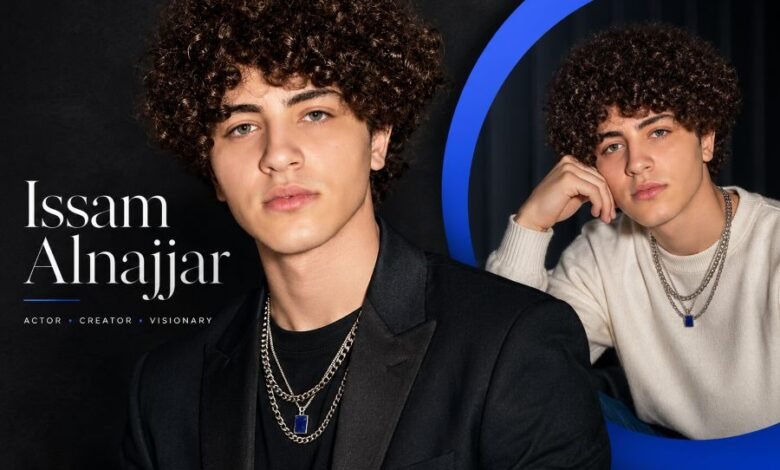
Last Updated on July 20, 2026 by Fame Katha Editorial Team
Introduction
Issam Alnajjar is a Palestinian-Jordanian singer, songwriter, and guitarist from Amman, Jordan. He is best known for “Hadal Ahbek,” an Arabic pop song that became a worldwide viral hit through TikTok, Spotify, Shazam, and other music platforms.
The young singer began by sharing simple guitar covers online. His life changed when “Hadal Ahbek” reached listeners far beyond the Arabic-speaking world. It topped Spotify’s Global Viral chart and Shazam’s global chart, helping him become the first artist signed by Universal Arabic Music.
As of July 2026, Issam Alnajjar remains active in music. His latest album, Night in Cairo, was released on 19 June 2026. The seven-song project combines Arabic melodies and instruments with modern international pop production.
Readers can also explore more easy-to-understand profiles of Asian and Middle Eastern public figures on Fame Katha.
Issam Alnajjar Quick Facts
| Detail | Information |
|---|---|
| Full name | Issam Alnajjar |
| Arabic name | عصام النجار |
| Date of birth | 12 May 2003 |
| Birthplace | Amman, Jordan |
| Public identity | Palestinian-Jordanian |
| Profession | Singer, songwriter, and guitarist |
| Music genre | Arabic pop and contemporary pop |
| Famous song | “Hadal Ahbek” |
| Debut album | BAREE? |
| EP | WARAY |
| Latest album | Night in Cairo |
| Current status | Active recording artist |
| Latest release date | 19 June 2026 |
Rolling Stone MENA and Billboard Arabia identify Alnajjar as having been born in Amman in 2003 to Palestinian parents.
Who Is Issam Alnajjar?
Issam Alnajjar is a modern Arabic pop artist who became famous while he was still a teenager. He attracted attention because his music sounded simple, emotional, and easy to remember.
Unlike many singers who begin their careers through television contests or large record companies, Alnajjar first built an audience on social media. He recorded himself singing while playing guitar and shared the videos on platforms such as TikTok, Instagram, and YouTube.
His voice, guitar style, and emotional lyrics helped him connect with young listeners. His songs are mainly in Arabic, but their melodies have also reached people who do not understand the language.
This international connection became clear when “Hadal Ahbek” spread across TikTok and entered global music charts.
Early Life and Interest in Music
Issam Alnajjar was born and raised in Amman, Jordan, in a Palestinian family.
Music was present around him, but he did not initially have professional musical training. His serious interest in singing and playing guitar developed during his teenage years.
A family friend gave him a guitar at a time when he was living away from several members of his family. The instrument became a source of comfort. He spent many hours teaching himself how to play songs by watching videos online.
Alnajjar began recording covers of well-known singers. One of his early popular videos featured Frank Sinatra’s “Fly Me to the Moon.” He told the Recording Academy that the video quickly moved from a few thousand views to around 200,000 views.
That response encouraged him to learn more songs and continue sharing his performances online. He covered music connected with artists such as Frank Sinatra, Elvis Presley, Michael Jackson, and other international performers.
How “Hadal Ahbek” Changed His Life
“Hadal Ahbek” was the song that transformed Issam Alnajjar from an online cover singer into an internationally recognised recording artist.
The Arabic title means approximately “I’ll Keep Loving You.” The song has a gentle guitar sound, a memorable melody, and simple romantic lyrics.
Alnajjar has explained that the song grew from a real conversation during the COVID-19 period. Its lyrics express love in a direct and innocent way. The chorus includes the idea of giving someone a safe place inside the heart.
He originally released the song without expecting it to become a global success. However, listeners began using its sound in TikTok videos. Its wordless melodic section made it especially easy for people from different countries to sing along, even when they did not understand Arabic.
The song eventually became popular in the Middle East, Europe, North America, Asia, and other regions.
“Hadal Ahbek” Chart Success
The success of “Hadal Ahbek” was not limited to social-media views.
In April 2021, Universal Music Group reported that the song had:
- Reached number one on Spotify’s Global Viral chart.
- Reached number one on Spotify’s United States Viral chart.
- Reached number one on Shazam’s Global Top 200 chart.
- Generated more than three billion TikTok views.
- Helped introduce Arabic-language pop music to a wider international audience.
The company described “Hadal Ahbek” as the first Arabic song to reach number one on both the Shazam Global and Spotify Viral Global charts. These figures were reported during the song’s original breakthrough period and should not be treated as its current totals.
First Artist Signed by Universal Arabic Music
Issam Alnajjar achieved another important career milestone in April 2021.
Universal Music Group, Republic Records, and music executive Wassim “SAL” Slaiby launched Universal Arabic Music to support artists from the Middle East and North Africa.
Alnajjar became the label’s first signed artist.
The official Universal Music Group announcement described him as a Jordanian singer and songwriter whose debut single had already achieved global success.
His signing was important because it showed that a major international music company saw strong worldwide potential in Arabic music.
It also gave Alnajjar access to professional production, promotion, collaborations, and international distribution at an early stage in his career.
International Versions and Collaborations
The popularity of “Hadal Ahbek” led to new versions created for different audiences.
Alnajjar worked with Canadian electronic music duo Loud Luxury and Iraqi-Canadian singer Ali Gatie on “Turning Me Up (Hadal Ahbek).”
The new version combined Arabic and English vocals with electronic pop production.
Another international version, “Si Tú Vuelas,” connected Alnajjar with Brazilian DJ Alok and Mexican singer Danna Paola. These collaborations helped the original melody reach English-speaking and Spanish-speaking listeners.
Alnajjar has also worked with or appeared alongside artists including:
- Elyanna
- R3HAB
- Manal
- Mohamed Ramadan
- GIMS
- Alan Walker
- Alok
- KIDDO
- Loud Luxury
- Ali Gatie
These collaborations show how his career has moved between Arabic pop, electronic music, international dance music, and modern global pop.
Debut Album BAREE?
Issam Alnajjar released his first full album, BAREE?, in 2021.
The project expanded the soft guitar-based sound that listeners first heard in “Hadal Ahbek.” It also allowed him to explore love, emotional confusion, separation, and young relationships through a larger collection of songs.
According to GRAMMY.com, BAREE? later collected more than 1.5 billion streams worldwide. That figure was reported in October 2025.
The album was an important step because it showed that Alnajjar wanted to build a long-term music career rather than remain known for only one viral song.
The WARAY EP and Later Songs
Alnajjar continued releasing music after his debut album.
In 2023, he released the WARAY EP. The project included work connected with R3HAB and Moroccan singer Manal.
He also released “TMO” with Egyptian performer Mohamed Ramadan and French-Congolese singer GIMS.
Other releases from this period included:
- “ANSAKI”
- “YA LEIL”
- “ZAFFEH”
- “HAYATI”
- “POISONED”
Each release gave Alnajjar space to experiment with different musical ideas. Some songs stayed close to romantic Arabic pop, while others used electronic beats, international production, or darker emotions.
Night in Cairo: Issam Alnajjar’s Latest Album
As of July 2026, Issam Alnajjar’s latest major project is Night in Cairo.
The album was released on 19 June 2026 through SALXCO UAM and distributed by Virgin Music Group. It contains seven songs and runs for approximately 17 minutes.
The track list includes:
- “HAYATI”
- “YA SIDI”
- “ZAFFEH”
- “AMARI”
- “TA3ALA”
- “POISONED”
- “Night in Cairo”
The album brings together Egyptian musical inspiration, Palestinian and Jordanian cultural elements, and modern Western pop production.
Alnajjar developed the project after spending time learning more about his identity as an artist. He wanted to reconnect with Arabic instruments, melodies, storytelling, and the audiences that first supported him.
In an interview with the Recording Academy, he explained that Egypt’s musical history and its importance to the wider Arab entertainment industry strongly influenced the album.
The Sound of Night in Cairo
Night in Cairo is not simply a repeat of “Hadal Ahbek.”
The album presents a more developed version of Issam Alnajjar’s sound. It mixes traditional Middle Eastern ideas with music that feels current and international.
For example:
- “ZAFFEH” uses ideas connected with traditional Palestinian and Jordanian celebration music.
- “HAYATI” has a smooth romantic sound designed for relaxed listening.
- “TA3ALA” includes a reggaeton-style influence.
- “AMARI” uses live vocals and orchestral elements.
- “POISONED” explores personal pressure, sadness, and emotional growth.
The project demonstrates how Alnajjar is trying to make Arabic culture understandable to global listeners without removing the sounds that make the music Arabic.
Why Issam Alnajjar’s Music Reached Global Listeners
Several factors helped Issam Alnajjar reach listeners around the world.
A Simple and Memorable Melody
“Hadal Ahbek” has a chorus that is easy to remember. Its wordless section allows listeners to join in without knowing Arabic.
Emotional Lyrics
The song describes love using direct and gentle words. The feeling can be understood even when the listener needs a translation.
Social-Media Timing
The song appeared during a period when people were spending more time online because of COVID-19 restrictions. TikTok allowed short sections of the song to travel quickly between countries.
A Modern but Familiar Sound
Alnajjar combined acoustic guitar with Arabic singing. The sound felt familiar to pop listeners while still carrying a clear Middle Eastern identity.
Authentic Cultural Identity
Instead of changing completely to fit an international audience, he continued using Arabic lyrics, regional instruments, and cultural references.
This balance helped make his music both local and global.
His Role in the Growth of Arabic Pop
Issam Alnajjar’s success arrived during a period when more Arabic-speaking artists were reaching international audiences through streaming platforms.
Artists no longer need every song to be in English before listeners in other countries can discover it. TikTok, Spotify, YouTube, Shazam, and other digital platforms can help a strong melody move between languages.
Alnajjar became one of the young performers who proved that an Arabic-language song could lead a global viral chart.
His career also helped draw attention to a new generation of Palestinian, Jordanian, and wider Middle Eastern artists experimenting with pop, electronic music, hip-hop, and traditional sounds.
Charity and Social Contribution
Alnajjar has used his music for charitable purposes.
He told GRAMMY.com that he auctioned the guitar that helped him begin his musical journey to raise money for children with cancer.
In 2023, he also participated in “Rajieen,” a large collaborative song involving artists from across the Middle East and North Africa. The project was connected with fundraising for the Palestine Children’s Relief Fund.
These activities connect his public career with causes involving children and Palestinian humanitarian support.
Interesting Facts About Issam Alnajjar
- He taught himself to play guitar by using online videos.
- A cover of “Fly Me to the Moon” helped him gain early attention.
- “Hadal Ahbek” was his first major original song.
- He did not expect the song to become an international hit.
- He became Universal Arabic Music’s first signed artist.
- His first album reportedly passed 1.5 billion global streams by October 2025.
- He auctioned his early guitar to support children with cancer.
- Night in Cairo was created to connect modern pop with Middle Eastern musical traditions.
- His music regularly mixes Arabic lyrics with sounds familiar to international pop listeners.
Frequently Asked Questions
Who is Issam Alnajjar?
Issam Alnajjar is a Palestinian-Jordanian singer, songwriter, and guitarist from Amman. He became internationally known through the viral Arabic song “Hadal Ahbek.”
Why is Issam Alnajjar famous?
He is famous because “Hadal Ahbek” became a major TikTok trend and reached number one on Spotify’s Global Viral chart and Shazam’s global chart.
What does “Hadal Ahbek” mean?
“Hadal Ahbek” means approximately “I’ll Keep Loving You” in English. It is a romantic Arabic song about continuing to love and care for someone.
When was Issam Alnajjar born?
He was born on 12 May 2003 in Amman, Jordan.
Is Issam Alnajjar Palestinian or Jordanian?
He is publicly described as Palestinian-Jordanian. He was born and raised in Jordan in a Palestinian family.
What was Issam Alnajjar’s first album?
His first studio album was BAREE?, released in 2021.
What is Issam Alnajjar’s latest album?
His latest album is Night in Cairo. It was released on 19 June 2026 and contains seven songs.
Is Issam Alnajjar still making music?
Yes. As of July 2026, he remains an active recording artist. His latest project is Night in Cairo.
Which artists has Issam Alnajjar worked with?
His collaborators include Elyanna, Ali Gatie, Loud Luxury, Danna Paola, Alok, R3HAB, Manal, Mohamed Ramadan, GIMS, Alan Walker, and KIDDO.
Final Thoughts
Issam Alnajjar’s career shows how one honest song can travel far beyond its original language.
He began as a teenager learning guitar through online videos. He then created “Hadal Ahbek,” a simple Arabic love song that became a worldwide success. The song brought him global chart recognition and made him the first artist signed by Universal Arabic Music.
His later work proves that he is continuing to grow beyond his first viral moment. Through BAREE?, WARAY, and Night in Cairo, he has explored new production styles while keeping Arabic lyrics and Middle Eastern musical identity at the centre of his work.
His journey remains an important example of how young Arabic artists can use digital platforms to reach worldwide audiences without leaving their language or culture behind.